Understanding Graph and Relational Databases: My Insights on Their Best Features and Use Cases

In today's fast-paced data-driven world, the choice of database system can significantly influence an application's performance and success. Two leading options, graph databases and relational databases, come with distinct features that cater to different needs. In this post, I will delve into both types of databases, providing specific examples and insights into their strengths, weaknesses, and suitable applications.

What is a Relational Database?
Relational databases organize data into tables, made up of rows and columns. Each table signifies a unique entity, and relationships among these entities are created using foreign keys. This tabular setup not only supports complex queries but also ensures data integrity through ACID (Atomicity, Consistency, Isolation, Durability) properties.
Since their inception in the 1970s, relational databases have become the foundation of various applications, from small businesses to Fortune 500 companies. Popular relational database management systems (DBMS) include MySQL, PostgreSQL, and Oracle Database.
Best Features of Relational Databases
Structured Data Storage: The tabular format of relational databases is straightforward, making data management intuitive. For instance, in a customer database, you can easily search through separate tables for customer information, orders, and addresses.
ACID Compliance: The ACID properties guarantee that transactions are always processed reliably. For example, a bank transaction ensures that a deposit and a withdrawal occur in an all-or-nothing manner, protecting sensitive financial data.
Powerful Query Language: SQL, the standard language for relational databases, allows complex queries and aggregations. A retail company can use SQL to generate sales reports and track inventory across multiple tables.
Data Integrity and Constraints: Various constraints, such as primary keys and foreign keys, help maintain the accuracy of the data. For example, ensuring that each order in an e-commerce database references a valid customer prevents data discrepancies.
Mature Ecosystem: With decades of evolution, relational databases offer extensive resources, including documentation and tools. This breadth of support helps developers troubleshoot and optimize their database systems effectively.
Use Cases for Relational Databases
Relational databases are particularly beneficial in scenarios requiring structured data and complex queries. Common use cases include:
Financial Applications: Banking systems rely on relational databases to manage thousands of transactions daily. For example, in 2022, major banks processed over 20 million transactions in a single day.
Enterprise Resource Planning (ERP): ERP systems, such as SAP and Oracle, leverage relational databases for handling complex data relationships and reporting functions crucial for large organizations.
Customer Relationship Management (CRM): Salesforce and similar platforms manage comprehensive customer data effectively, tracking interactions and sales through relational tables.
What is a Graph Database?
Graph databases represent data as nodes, edges, and properties, emphasizing connections among data points. Nodes are the entities, edges denote relationships between them, and properties provide additional context. This structure is especially efficient for traversing and querying intricate relationships.
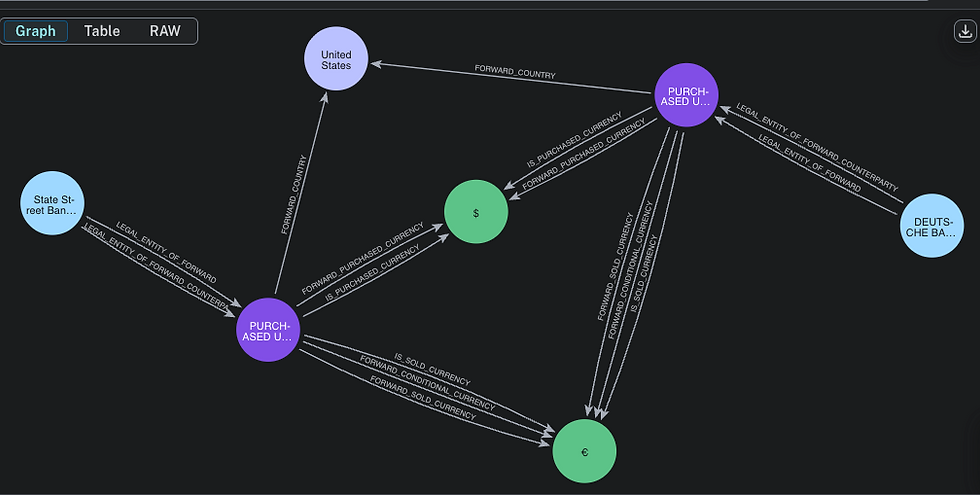
The recent surge in social networks, recommendation engines, and similar applications has contributed to the popularity of graph databases like Neo4j, Amazon Neptune, and ArangoDB.
Best Features of Graph Databases
Flexible Schema: Graph databases allow for easy alterations in the data model, which is beneficial in dynamic environments. For instance, in a social network, adding new user types or connection types can be done without restructuring the entire database.
Efficient Relationship Handling: The graph model excels in scenarios with complex relationships. For example, in fraud detection, a graph database can quickly highlight suspicious transaction patterns, enabling faster investigations.
High Performance for Traversal Queries: Because of their design, graph databases handle relationship-heavy queries efficiently. For instance, a recommendation engine can suggest related products to users in milliseconds, improving user experience.
Intuitive Data Modeling: The graph approach resembles real-world scenarios better, making it easier for developers to conceptualize. In academia, for example, knowledge graphs can illustrate relationships between topics, authors, and published works.
Built-in Analytics: Many graph databases provide analytical features that simplify relationship analysis. A city planning application can analyze transportation networks directly within the database, yielding insights into traffic patterns.
Use Cases for Graph Databases
Graph databases shine in applications where relationships are central. Some examples include:
Social Networks: Systems like Facebook use graph databases to manage user connections, friend recommendations, and activity feeds, where nodes represent users and edges represent friendships.
Recommendation Engines: Companies like Netflix utilize graph databases to analyze user behavior and suggest content based on connections between viewers and titles. Up to 80% of Netflix views come from recommendations.
Fraud Detection: Businesses in the financial sector leverage graph databases to uncover fraud. By analyzing transactions and their relationships, institutions can identify suspicious behavior and prevent losses.
Comparing Graph and Relational Databases
When choosing between graph and relational databases, understanding their differences is crucial:
Data Structure
Relational Databases: Utilize a fixed table-based structure that accommodates structured data. This is ideal for applications with consistent data models.
Graph Databases: Employ a flexible graph structure that allows for dynamic relationships, making them preferable for handling unstructured or semi-structured data.
Query Language
Relational Databases: Use SQL for querying, which is powerful for analyzing structured data but may become complex with deep relationships.
Graph Databases: Utilize graph-specific languages like Cypher or Gremlin, which simplify the traversal of relationships.
Performance
Relational Databases: As query complexity increases, especially with numerous joins, performance may decline. Studies show that over 70% of complex queries in relational databases slow down substantially due to their structure.
Graph Databases: They maintain high performance even with intricate queries, as their architecture is optimized for relationship-heavy data access.
Scalability
Relational Databases: Typically scale vertically, which can limit flexibility. Adding more resources may require extensive downtime.
Graph Databases: Often built for horizontal scaling, making them suitable for handling vast datasets with complex interconnections without performance drops.
Making an Informed Choice
Both graph and relational databases bring unique advantages to the table. Relational databases are excellent for structured data, complex queries, and maintaining data integrity. In contrast, graph databases excel in scenarios that require profound relationship insights and adaptability.
To choose the right database, consider what your application demands. Assess the data structure, the complexity of your queries, and the degree of performance needed. By grasping the strengths and appropriate applications of both types of databases, you can align your selection with your project goals effectively.